Sheer Underwear Set Seams That Can Rub and How to Check Them
A sheer underwear set can feel soft across the mesh yet still rub at a waistband join, lace edge or underwire channel. The useful check is not just whether the fabric feels smooth in your hand. It is whether the parts that touch your skin stay comfortable when you sit, walk and reach.
You do not need to rule out delicate lingerie because it has visible stitching. Seams give lightweight fabrics structure and help hold elastic in place. What matters is their finish, position and tension against your body. Start with an inside-out inspection, then check movement if the retailer’s hygiene and returns conditions allow it. Here is where to look and how to separate a rough seam from a fit problem.
Where a sheer underwear set can rub
The most noticeable seam is not always the troublesome one. A decorative line across a cup may sit comfortably, while a small overlap of elastic at the hip creates a concentrated pressure point.
Check these areas on both pieces rather than assuming the briefs will feel like the bra.
| Contact point | What to inspect | What may cause discomfort |
|---|---|---|
| Brief waistband | The inside edge and elastic joins | A firm overlap, twisted elastic or excessive tension |
| Leg openings | Binding, stitching and lace edging | A scratchy finish or an edge that moves repeatedly across skin |
| Gusset joins | Where the lining meets the front and back panels | A raised ridge or exposed seam allowance |
| Bra underband | Lower edge, side seams and fastening backing | Bulky stitching, a rough corner or concentrated pressure |
| Underwire channels | The covered ends near the centre front and underarm | A stiff finish, poor positioning or damaged casing |
| Strap attachments | Rings, sliders and stitched joins | A turned edge or hardware resting awkwardly against skin |
Visible stitching is not automatically a comfort problem. A neatly finished sewn edge may feel better than a flat-looking edge that is stiff or poorly positioned.
Inspect the inside before trying it on
Keep the tags attached and check the retailer’s return conditions before handling or trying on the garments. Do not assume a brief try-on makes an intimate item eligible for return.
Trace the skin-facing edges
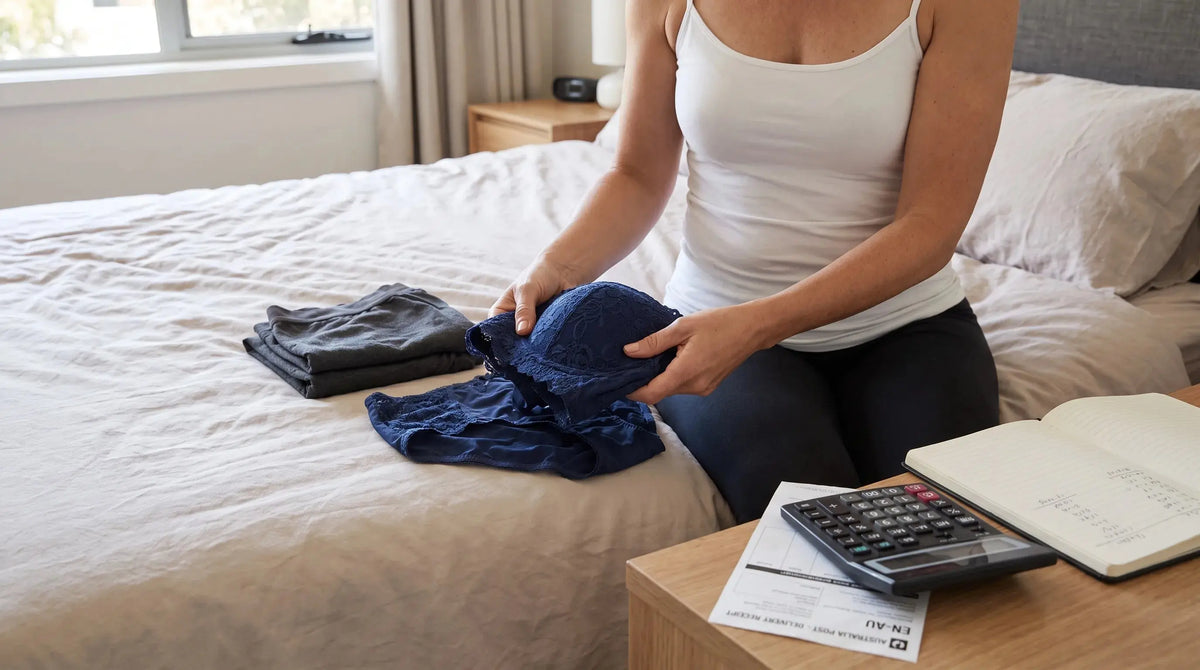
Lay each piece on a clean surface and gently turn it to see the inside. Run a clean fingertip along the waistband, leg openings, gusset joins and bra band, using light pressure rather than stretching the fabric hard.
When checking a sheer underwear set, compare the feel of each seam with the fabric immediately beside it. A small change in thickness is normal; a sharp, prickly or unusually rigid spot deserves a closer look.
Feel in both directions. A thread end or folded corner may lie flat one way but catch when your finger moves back across it. This is especially useful around elastic overlaps and fastening tabs.
Examine joins and seam allowances
Look where several materials meet, such as mesh, lace and elastic at the hip. These junctions can be thicker than the surrounding fabric without being faulty, but their position matters if they sit beneath a close-fitting waistband.
Check whether the inner seam allowance, the fabric beyond the stitching, lies reasonably flat. Look for bunched material, twisted binding, loose stitching or an exposed hard edge. Compare the left and right sides too; an obvious difference can help you locate an issue.
Do not trim threads, cut labels or pull at stitching before deciding whether to keep the garment. Altering it can damage delicate construction and affect your return options.
Use a short movement check, where permitted
A sheer underwear set should be checked in the positions you expect to wear it, not only while standing in front of a mirror. Follow the store’s hygiene rules and, where a briefs try-on is permitted, keep your own clean underwear underneath. That extra layer limits how precisely you can judge skin contact, so treat this as a fit and movement check rather than proof that every seam will feel comfortable.
Start with the bra band level and the straps adjusted without digging in. Check that the briefs sit in their intended position instead of pulling them unusually high or low to avoid an edge.
Walk a few steps, sit in a chair and raise your arms gently. Notice whether a join stays put, rolls inward or travels across the same spot. If you plan to wear the set beneath a fitted dress, check that combination too, provided this is compatible with the return conditions.
Stop if anything scratches, pinches or hurts. Repeatedly adjusting the same edge is useful information, not something you need to tolerate until the garment supposedly softens.
Tell a rough seam from a fit problem
A seam can rub because its surface is rough, because it is being pulled too tightly or because excess movement keeps dragging it over skin. Those problems need different responses.
With a sheer underwear set, note whether the sensation stays at one small point or follows a whole edge. This will not diagnose every issue, but it helps you decide what to inspect next.
| What you notice | What to check next |
|---|---|
| One prickly point while standing still | A thread end, label corner or bulky join |
| Pressure along most of a waistband or leg opening | Size, elastic tension and whether the cut suits you |
| Rubbing that starts mainly when walking | Whether the edge shifts, rolls or bunches |
| Discomfort beneath one underwire end | Wire position, cup fit and the condition of the channel |
| A ridge that becomes noticeable under clothing | Whether the outer garment presses directly over a seam |
Sizing up is not an automatic fix. It may relieve excessive tension, but a looser garment can also move more. Likewise, tightening bra straps will not repair a rough underband seam and may create pressure elsewhere.

What to do when you find a troublesome edge
Adjust only what is designed to adjust
Try a modest strap adjustment or a different bra fastening position if the fit allows it. Smooth any folded fabric and check that removable or adjustable components are sitting as intended. Then repeat the movement that revealed the problem.
For briefs, avoid repeatedly shifting the waistband away from its natural position. If the only comfortable arrangement requires constant repositioning, a different cut may suit you better.
If a sheer underwear set has an isolated rough point, inspect it rather than trying to compensate by tightening or loosening everything around it. Fit adjustments cannot remove a hard seam ridge or mend damaged stitching.
Do not rely on washing or DIY fixes
Once you have decided to keep the garment, follow its care label. Washing may change the feel of some finishes, but it is not a dependable cure for scratchy construction, an exposed wire or an unsuitable fit. Washing may also affect return eligibility.
Avoid cutting into seams, removing elastic or applying heat to flatten a join. Delicate mesh can be damaged easily, and seams around a gusset or underwire channel have a practical role.
For a new item with suspected faulty stitching, contact the retailer before altering it. Describe the exact location and provide a clear photograph if requested. If an underwire is poking through its casing, stop wearing the bra rather than pushing it back and continuing.
Check product photos before ordering
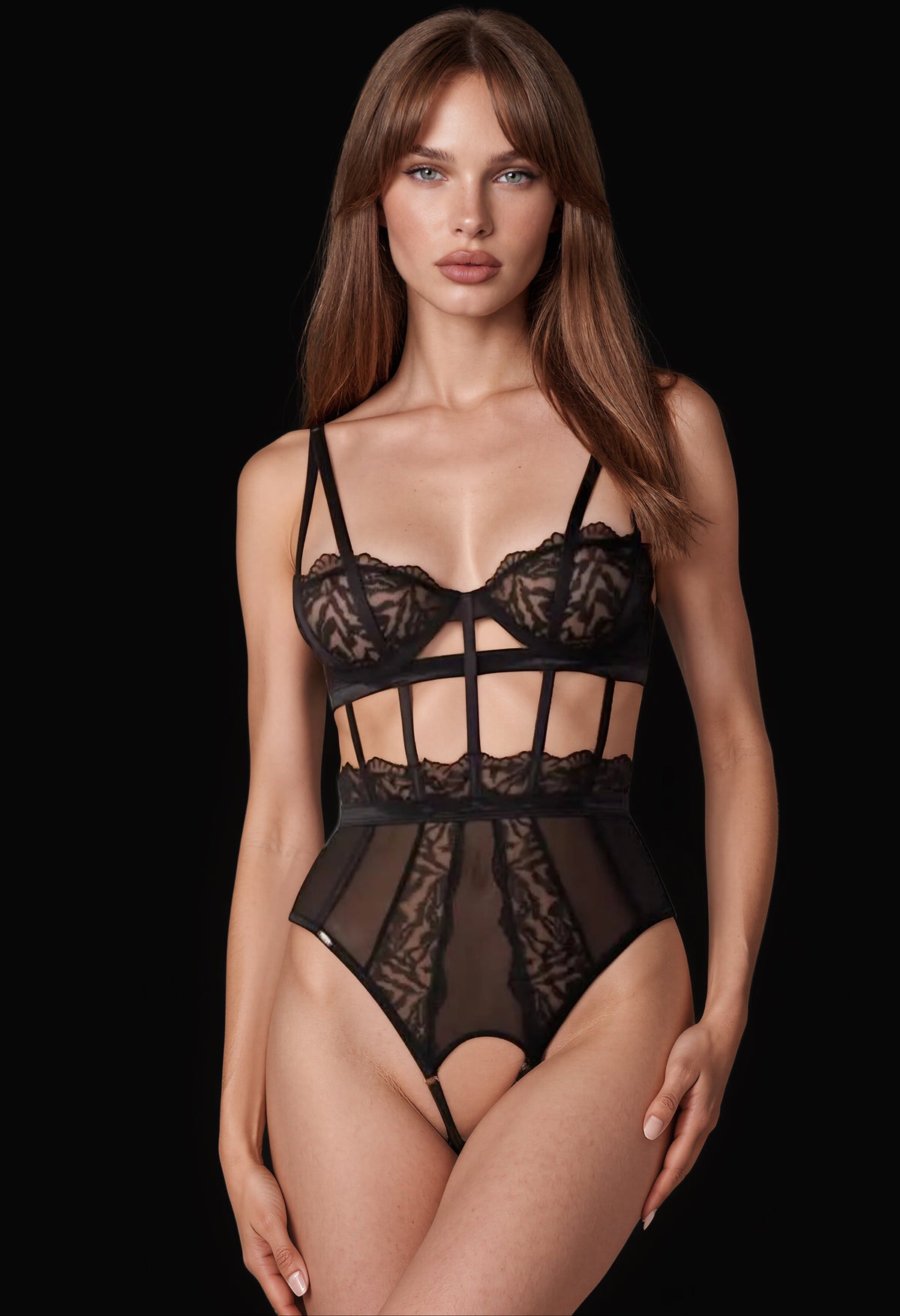
Online photographs cannot tell you exactly how a seam will feel, but they can show where it is likely to sit. Zoom in on leg bindings, waistband joins, underband edges and any point where straps meet lace or mesh. An inside view is particularly useful when available.
When comparing a sheer underwear set online, separate confirmed construction details from what the styling merely suggests. “Sheer” describes transparency, not softness, and “seamless” does not necessarily mean there are no edges or joins anywhere.
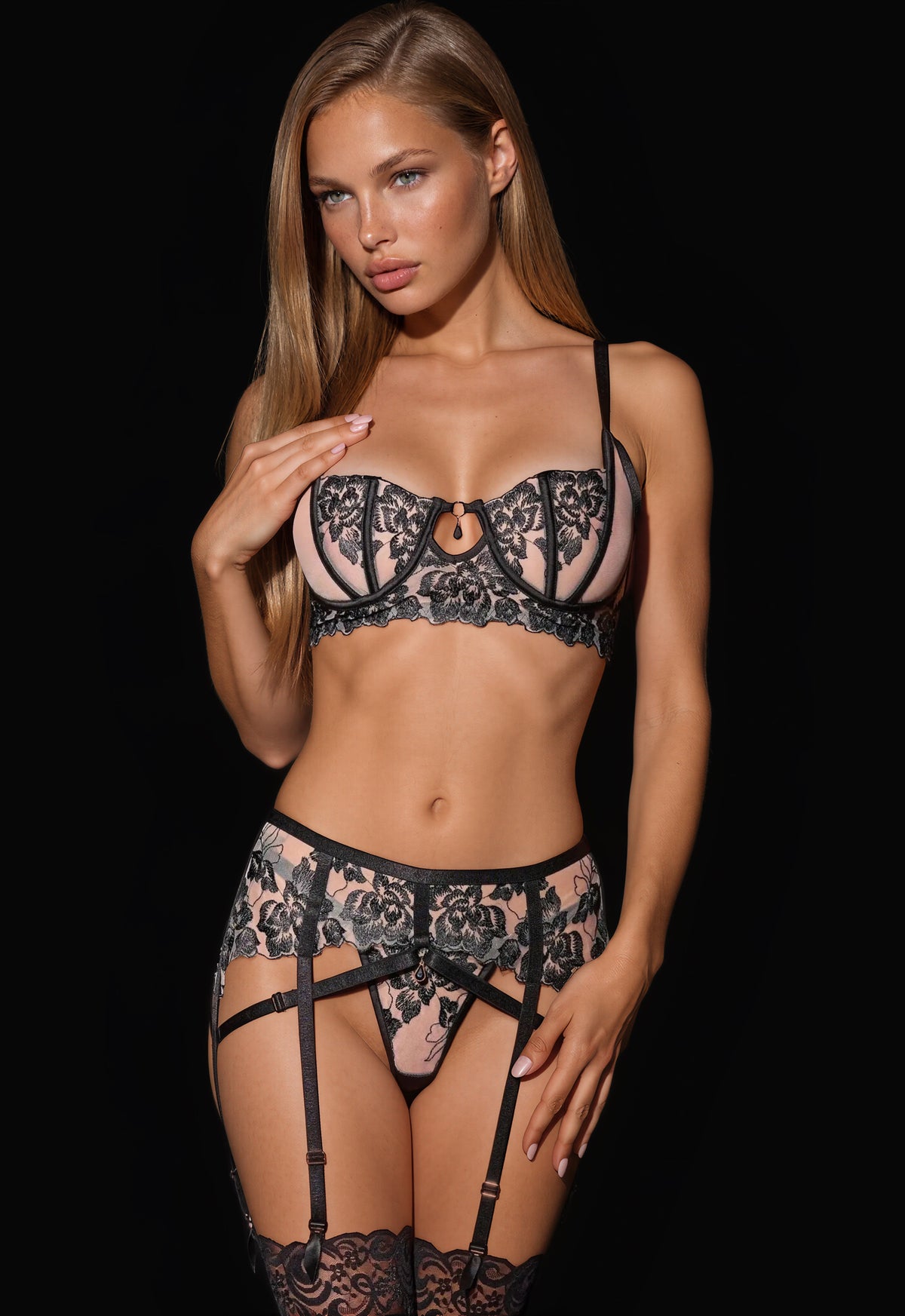
For example, Lingerie Fox’s black sheer bra, G-string and garter set includes an underwired bra and adjustable straps. Those details identify specific areas to assess, but they do not establish how the wire channels or strap attachments will feel on your body.
If the photographs leave a question unanswered, ask about that location: “Is the inside leg edge bound?” is more useful than “Is it comfortable?” For broader sizing considerations, our guide to lingerie fabrics and fit provides context alongside these seam checks.
Frequently asked questions
Are flat seams always more comfortable? No. A flatter seam reduces bulk, but its thread, stiffness and position still matter. Elastic tension and garment movement can make even a low-profile edge uncomfortable.
Should a sheer underwear set leave marks? A light, temporary impression does not by itself prove the fit is wrong. Pain, persistent tenderness or broken skin are reasons to stop wearing the garment and reassess it. Seek medical advice for symptoms that persist or worsen.
Is lace more likely to rub than mesh? Neither fabric name guarantees comfort. Check the lace edge, mesh binding and stitching individually. A smooth fabric panel can still have a rough join, while a well-finished lace edge may feel comfortable.
Can I check seams when buying lingerie as a gift? You can inspect photographs and ask about construction, but you cannot reliably predict another person’s sensitivity or fit. Use their known preferences, check the gifting and returns conditions and leave tags attached so they can assess the garment themselves.
Choose the finish as carefully as the style
When browsing Lingerie Fox’s lingerie range, look beyond the overall silhouette to the edges that will touch your skin. Check the product details, confirm sizing and ask about any unclear joins before ordering. A careful inspection helps you choose lingerie for how it feels as well as how it looks.