Why Premium Lingerie Can Pill and How to Minimise It
Tiny bobbles on premium lingerie can be disappointing, especially when you have chosen a set for its soft feel or delicate finish. But pilling does not automatically mean the garment is poor quality. It happens when loose surface fibres tangle together through friction, and some fabrics are more susceptible than others. Understanding where those bobbles come from helps you reduce them without damaging lace, mesh or stretch panels in the process.
The most useful approach is to identify the surface change first, reduce unnecessary rubbing and follow the garment’s care label. Removing pills should come last, not first.
Why premium lingerie can pill
Pilling begins when abrasion works fibre ends towards the fabric’s surface. Those fibres become tangled through repeated rubbing, forming small balls that remain attached to the material.
That rubbing can happen during wear, washing or storage. A bra band moving beneath a fitted top, briefs rubbing against trousers or a bodysuit tumbling beside rougher clothing can all create friction.
Price alone cannot eliminate this process. Fabric construction, yarn characteristics, fibre strength and finishing all influence how a material behaves. A luxurious, soft surface can still contain exposed fibres that become tangled with use.
Fibre type and construction make a difference
Stronger fibres can hold a pill in place rather than allowing it to break away. Some fabrics containing polyester or polyamide may therefore retain visible bobbles, although the fibre name alone cannot predict performance.
Cotton can pill too. Silk and other delicate fabrics are not immune to surface abrasion, but the resulting damage may look more like fuzzing or snagging than rounded pills.
With premium lingerie, check the fabric composition and construction rather than assuming every smooth or expensive-looking material will resist bobbling. Satin describes a fabric structure, not a fibre, so two satin garments can behave differently.
Our guide to how fabric, fit and finish define lingerie luxury explains these distinctions in more detail. For care purposes, the label on the individual garment remains your starting point.
Is it pilling, lint or a snag?
Before trying to tidy the surface, look closely in good light. Several common changes can resemble pilling from a distance, but they need different treatment.
| What you can see | What it may be | Safest first response |
|---|---|---|
| Small, rounded fibre balls attached to the surface | Pilling | Avoid pulling; check the care guidance before attempting removal |
| Loose fluff sitting on top of the fabric | Transferred lint | Gently lift away only what comes free without resistance |
| An elongated loop or pulled thread | A snag | Leave it intact and seek repair advice |
| A soft, uneven halo without distinct balls | Surface fuzzing | Reduce abrasion rather than shaving the surface |
| Fine elastic threads protruding from a stretched area | Elastane or elastic damage | Stop trying to remove the threads and assess the garment’s condition |
Pilling on premium lingerie is not the same problem as a pulled lace loop. Cutting something that looks like a bobble could sever a structural thread, leaving a hole or allowing an edge to unravel.
If you cannot tell what you are seeing, photograph the area and ask the retailer before treating it. Avoid stretching the fabric tightly to inspect it, particularly around fine mesh and lace.
Reduce friction while you wear it
Start with the location of the bobbles. Wear concentrated beneath a bra band, along a side seam or around a bodysuit’s leg openings can help identify where repeated rubbing occurs.
Rough garment seams, exposed zip teeth and textured outer layers can catch or abrade delicate intimates. Check the inside of clothing worn over the affected area. A small rough patch on a waistband may matter more than the overall softness of the outfit.
Fit is another factor, but pilling is not proof that you bought the wrong size. A garment that shifts frequently can rub, while excessive tension can stress delicate panels. Look for rolling, digging, slipping or repeated adjustment rather than automatically sizing up or down.
For bridal lingerie and special-occasion sets, try the complete outfit before the day. This lets you check whether dress fastenings, embellishments or internal seams catch against the underwear.
Rotating between suitable everyday bras and lingerie sets also spreads wear across garments. It does not make any individual piece pill-proof, but it avoids subjecting the same contact points to every outfit and every wash.
Wash gently, without leaving garments unclean
Wash premium lingerie according to its care label, using the least abrasive method that still cleans it properly. Delicate pieces need protection from friction, but leaving perspiration and body oils in the fabric is not a useful care strategy either.
Separate delicate fabrics from rough laundry
Keep lingerie away from towels, denim and clothing with exposed zips or hook-and-loop fasteners. These can transfer lint, rub the surface or catch fine threads.
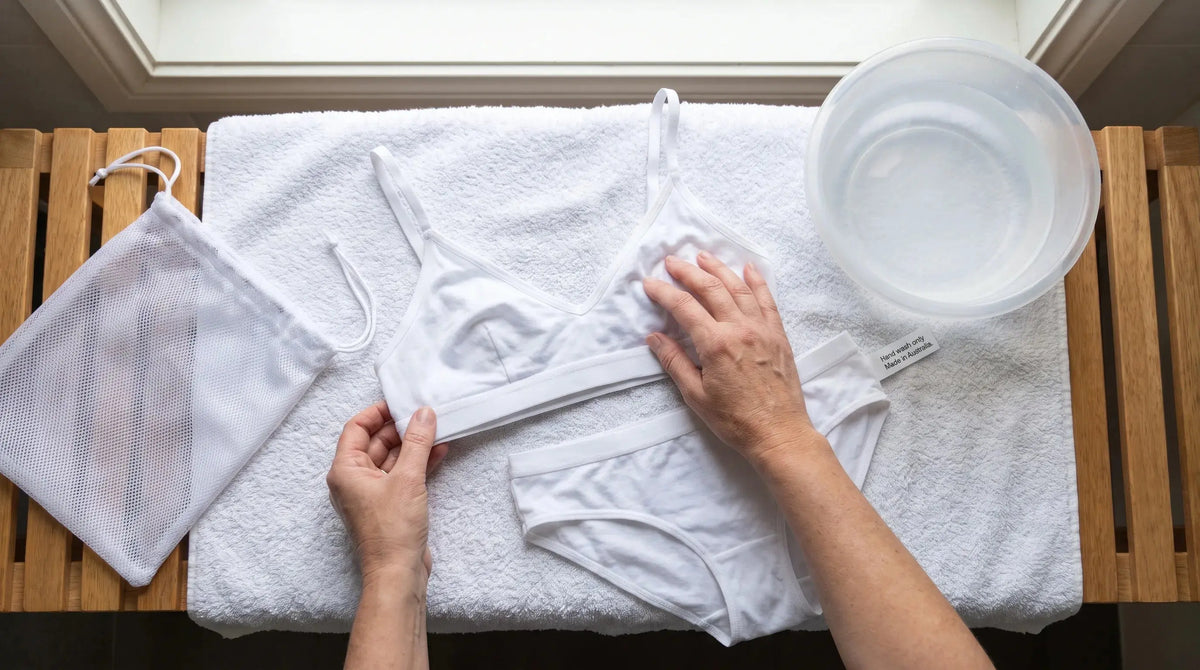
Fasten bra hooks before washing. If the label permits machine washing, use a suitable lingerie wash bag and avoid packing it tightly. A bag reduces direct contact with other items, but it does not make an unsuitable wash cycle safe.
Wash similar colours together and check whether a special piece needs individual care. An embellished bridal set may have different requirements from everyday stretch briefs.
Match the method to the care label
When handwashing is permitted, use cool water if specified and a detergent suitable for the fabric. Gently move the garment through the water rather than scrubbing panels together or working at them with a brush.
Avoid prolonged soaking unless the care instructions allow it. Follow the detergent’s dosing guidance and rinse thoroughly; extra detergent is not a substitute for effective cleaning.
For machine-washable pieces, choose the label-approved temperature and a gentle cycle. Do not add bleach or fabric softener unless the garment’s instructions specifically permit it. Silk, elastane and decorative finishes can have different product restrictions.
Dry and store without adding abrasion
Do not wring delicate lingerie. Where the care label allows, gently press out water and blot with a clean towel without rubbing. Reshape and dry as directed, away from strong heat and direct sunlight.
Avoid tumble drying unless explicitly permitted. Heat and tumbling can stress stretch components and create further friction.
Once dry, keep hooks and embellishments from catching adjacent pieces. Our lingerie storage guide offers practical ways to organise sets while protecting delicate details.

Can you safely remove existing pills?
Do not reach straight for a razor, fabric shaver or scissors. Tools designed for substantial knitwear can damage fine lingerie, particularly when the fabric contains open lace, mesh, embroidery or stretch yarns.
A shaver may catch a raised motif or draw thin material into its cutting head. Scissors can snip the underlying fabric, and pulling a pill can draw out fibres or distort the surface.
For premium lingerie, leaving a few small pills alone can be safer than pursuing a perfectly smooth finish. Start by separating removable lint from anything attached to the garment. Lift away only loose fluff that releases without tugging; do not pick at anchored bobbles.
If the manufacturer recommends a particular depilling method for that exact fabric, follow its instructions. Testing an inconspicuous area may help assess suitability, but it does not make an otherwise unsuitable tool safe.
Where there is no clear guidance, ask the retailer or a professional experienced in delicate garment care. Stop any treatment immediately if the surface lifts, stretches or catches. Once fibres have been cut away, the change cannot be reversed.
When pilling deserves a closer look
A small amount of localised bobbling after repeated wear is different from widespread surface deterioration after a first careful wash. Neither the price nor the presence of pills alone establishes whether an item is faulty.
If premium lingerie develops extensive pilling unusually early, keep the care label, purchase details and clear photographs. Record how you washed and wore it, including the detergent, cycle and other items in the load. Contact the retailer before depilling, as treatment can alter the evidence and cause additional damage.
Australian consumer guarantees include acceptable quality, which takes account of factors such as the product’s nature, price and representations made about it. The ACCC’s guidance on consumer rights and guarantees explains the broader framework. Whether a particular garment meets those guarantees depends on the circumstances, not simply whether bobbles are present.
Frequently asked questions
Does pilling mean my lingerie is poor quality? Not necessarily. Pilling depends on fibre characteristics, construction and abrasion as well as manufacturing choices. Consider how quickly it appeared, how extensive it is and whether the garment was used and cared for as directed.
Can premium lingerie pill after handwashing? Yes. Handwashing can still create friction if you scrub, rub panels together or wring the garment. Gentle handling matters just as much as avoiding the washing machine.
Will a lingerie wash bag prevent all bobbling? No. It can reduce contact with other laundry and help contain hooks, but it cannot prevent friction during wear or compensate for an unsuitable wash temperature, cycle or load.
Can I use a lint roller on lace? Adhesive rollers can pull on raised details or delicate threads. Avoid them on fragile lace, embroidery and open mesh unless the manufacturer confirms they are suitable. Only remove loose lint that lifts away without resistance.
How should I care for a lingerie gift? Keep the garment’s care information with the gift and check the retailer’s exchange conditions before removing tags. For bridal pieces or embellished sets, consult the individual label rather than relying on a general lingerie washing routine.
Choose your next set with care in mind
When browsing Lingerie Fox’s lingerie collection, consider how each piece will fit into your wardrobe and care routine, whether you want everyday intimates, a bodysuit or a bridal set. Check the available product details and follow the garment’s care label once it arrives. Gentle handling cannot prevent every pill, but it can reduce avoidable abrasion and help preserve the finish you chose.